Baby Comes Back to Life After Mother Holds It
Kate Ogg has an answer fix for the day her son Jamie asks who's older, he or his twin sister:
"Technically, you're two minutes older," she'll tell him, "but Emily's been alive longer."
Shortly subsequently Jamie and Emily were built-in prematurely at 27 weeks on March 25, 2010, doctors told Ogg and her husband David that Jamie had died. Nurses placed his limp trunk across his mother'southward bare chest so she could say bye.
Only after five minutes, Jamie began to move. The baby's doctor told the Oggs his movements were reflexive and non a sign of life. But every bit his mother connected cuddling him, Jamie opened his eyes. Kate put some breast milk on her finger, and he eagerly accustomed it. Their tiny baby grew stronger and stronger in his mother'southward artillery, and their concluding good day turned into a hello.
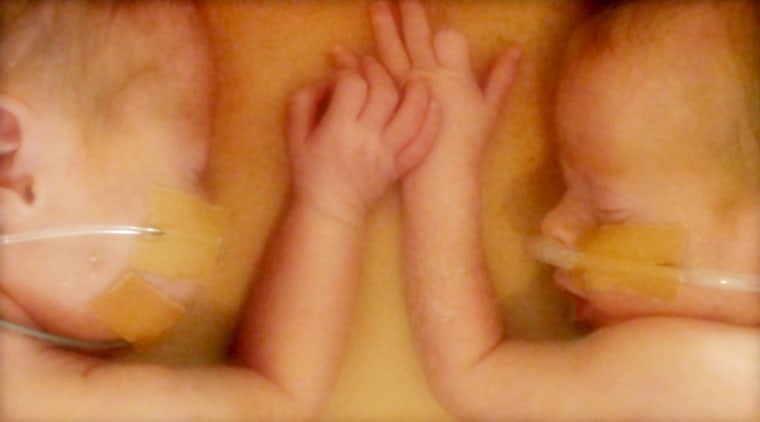
"I'd carried him inside me for only six months – not long plenty – but I wanted to meet him, and to hold him, and for him to know us," Kate Ogg told TODAY's Ann Curry in 2010. "We'd resigned ourselves to the fact that we were going to lose him, and we were just trying to brand the most of those last, precious moments."
"We experience so fortunate," David Ogg told TODAY. "Nosotros're the luckiest people in the world."
Read the original story: Mom'south hug revives baby pronounced dead
The Oggs' experience garnered international media attending and dramatically highlighted the benefits of parents belongings newborns skin-to-skin on their bare chests, which is commonly called "kangaroo care." Though the medical benefits of skin-to-skin contact are well documented, it's still not encouraged, or even allowed, at many hospitals.
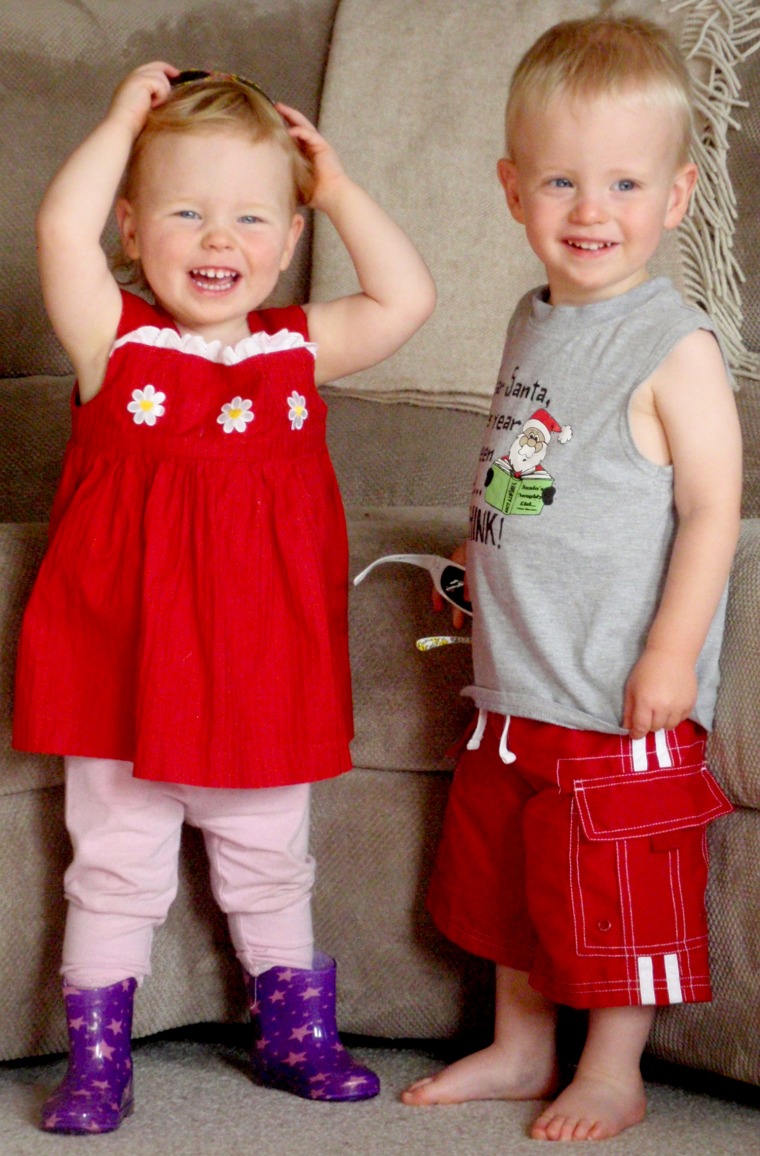
Jamie and Emily, at present nigh 2, are doing great, Kate Ogg said in a Skype interview as she and her married man held the tow-headed toddlers on their laps. In November, the family moved from Sydney, Australia, to a dwelling with an ocean view in Nelson, New Zealand, "a very chilled-out town," she said.
The twins' last checkups showed they are developing completely normally, she said. To demonstrate, she asked, "Where'south your nose? Where are your ears?" and the twins pointed to the right torso parts. "Where's your belly?" she asked, and the kids obediently lifted their shirts.
Soon after the twins' premature nascency – and Jamie'due south revival – the Oggs promised themselves they wouldn't drive themselves crazy worrying near potential issues related to their children's prematurity. They'd bask their babies, and cross those bridges when they got to them. "If there was a problem," Kate Ogg says they figured, "we'd notice out about it eventually."
Even so, Ogg and her husband remember well-nigh Jamie's brush with expiry "all the time. Probably too much," she said. She panics if the twins sleep in and she doesn't hear a sound from the nursery. "I'thousand a bit too morbid, I think."
Sharing their story publicly also led to some unintended emotional consequences. A Colorado woman told Ogg Jamie's story caused distress in a back up group for parents who've lost babies. "The portrayal of our story almost suggested if you love your baby enough you tin can bring it back to life. That's 1 of the concerns we had about going public."
Surprise! Their 'lilliputian sumo'
As the spotlight faded, the Oggs returned to normal life every bit a happy family – and these days they take a new blessing to count.
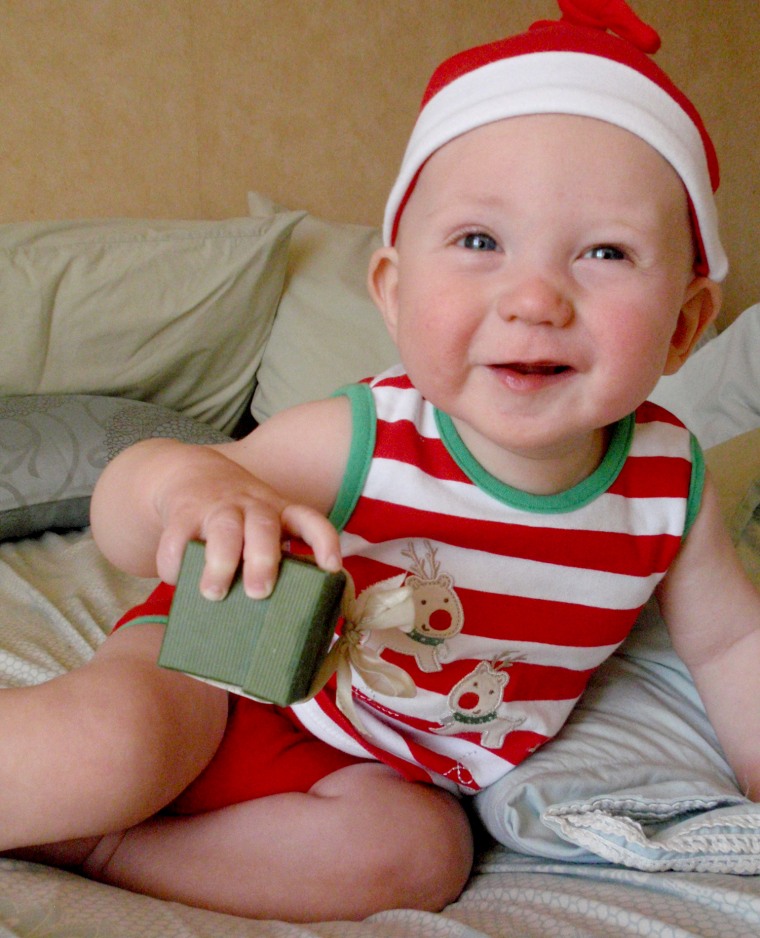
The big news lately in the Ogg family is that Jamie and Emily now have a piffling brother, Charlie, built-in Apr 27.
Jamie and Emily were conceived via in vitro fertilization, and the Oggs had planned to endeavor it once more when the twins turned 1. Then Kate Ogg was pretty surprised when she learned she was already three months meaning earlier the twins were even a year quondam. She hadn't undergone whatsoever fertility treatments and figured her missed periods were due to breastfeeding Jamie and Emily.
Charlie Ogg too tried to arrive extremely early on, at 20 weeks, just made it to term cheers to stitches to close his mother's cervix and the hiring of an au pair to do the heavy lifting with the twins while mom was on bed balance.
Ogg had gestational diabetes while pregnant with Charlie, who weighed more 10 pounds at nascence — more than 4 times his brother's and sister'south birth weight of but over 2 pounds each. The three now article of clothing the aforementioned size diaper, and Charlie can wearable Jamie's clothes. Ogg describes her youngest as "a little sumo."
She held him for three and a one-half hours after the commitment.
"Just give him to me when he's born," Ogg instructed her doctor. Every bit a result of her experience with the twins, she says, ''I'one thousand more confident in telling medical professionals what I desire with my babies."
The science backside kangeroo intendance
While the Oggs have been enjoying their 3 salubrious children, the story of Jamie's remarkable birth has helped publicize the growing body of research behind kangaroo care.
It's non a miracle cure. Nurse researcher Susan Ludington pioneered kangaroo care in the United states, and she cautions: "Information technology does not resurrect the dead." Ludington, a professor of pediatric nursing at Case Western Reserve University in Cleveland, speculates that Jamie might take had an ineffective centre beat that was difficult to detect.
What she'd like to think happened, Ludington says, is that skin-to-skin contact with his parents made him more alert. In 2005, she says, researchers identified a special set of nerves in babies that are "exceedingly sensitive" to pleasant human bear on.
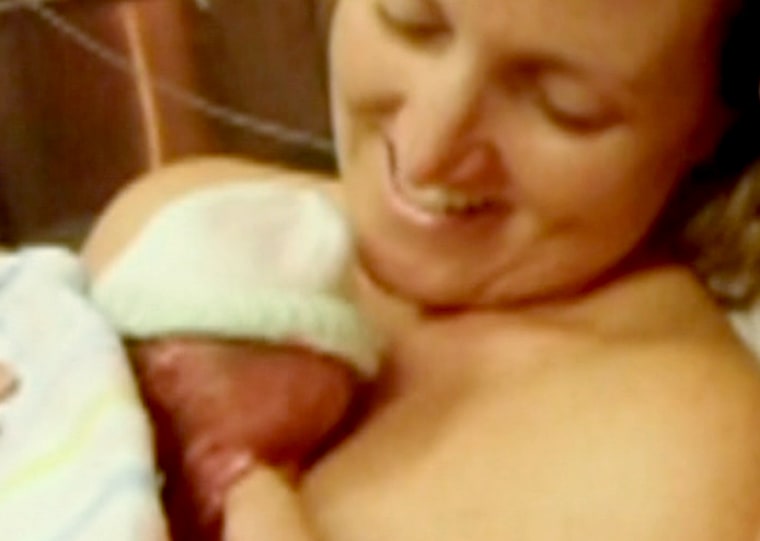
Skin-to-skin contact with their mothers releases oxytocin, the so-chosen "cuddle hormone," which affects multiple areas of newborns' brains, Ludington says. The hormone makes their centre beat and breathing become more regular.
Kangaroo care can besides help minimize pain in preterm and total-term babies. Celeste Johnston, director of research at the McGill Academy School of Nursing in Montreal, has investigated its use in babies born as early on every bit 28 weeks' gestation.
In Johnston's studies at present, all babies are held peel-to-skin with their mothers earlier undergoing a procedure such as a heel stick. "I can't practise command groups (with no skin-to-peel contact) anymore," she says, "because I don't think it's ethical."
The length of time moms hold babies before procedures doesn't seem to affair, says Johnston, who's found fifty-fifty fifteen minutes of peel-to-skin contact finer minimizes pain.
"The evidence is really pretty overwhelming about how practiced it is for term and preterm babies," nursing researcher Diane Spatz says of kangaroo care, which she prefers to call skin-to-peel. "It'south not like we need more than research… but we have to get people to actually do it."
Overcoming resistance
Despite the evidence that information technology works, the medical establishment has been ho-hum to recommend peel-to-skin contact with newborns. Ignorance about the enquiry findings and fright of handling premature babies are two of the main obstacles, say Ludington and Spatz, who works at Children's Hospital of Philadelphia.
"In the United States, our biggest reason is the physicians don't know almost information technology because information technology'due south nursing-generated knowledge," Ludington says. "The physicians want to see the data, but they don't read any nursing journals."
Fear plays a role, besides, Spatz says. "I yet see in nearly NICUs (neonatal intensive care units) that skin-to-skin is not a standard of care." NICU babies tend to be tiny and fragile and hooked up to tubes and machines, and both nurses and parents worry almost trying to move them, she says.
Her infirmary has filmed an instructional video that'south used in NICU's effectually the world, Spatz says. Information technology shows step-past-stride how to transfer a critically ill baby from an incubator to the parent'south breast. Practicing with a doll first helps eliminate the fright gene.
"Information technology'southward the thing the parents look forrad to the most in their unabridged lives," Spatz says. "The outset time they get to hold their baby skin to skin, everyone cries. The nurses are crying, the parents are crying. It's then beautiful."
Upwards until that point, it'south like the nurse owns the babe, Spatz says. "Once you do skin-to-skin, that infant is yours."
Read more on TODAY Moms:
Kindergarteners in honey
Sweet photo of dad feeding baby turns controversial
Duggars talk nearly their miscarriage, next baby
Tattoos for grandparents
Preschool gives kids with cancer a chance to play
Source: https://www.today.com/parents/pronounced-dead-revived-moms-hug-miracle-baby-turning-2-366375
0 Response to "Baby Comes Back to Life After Mother Holds It"
إرسال تعليق